
 By
By 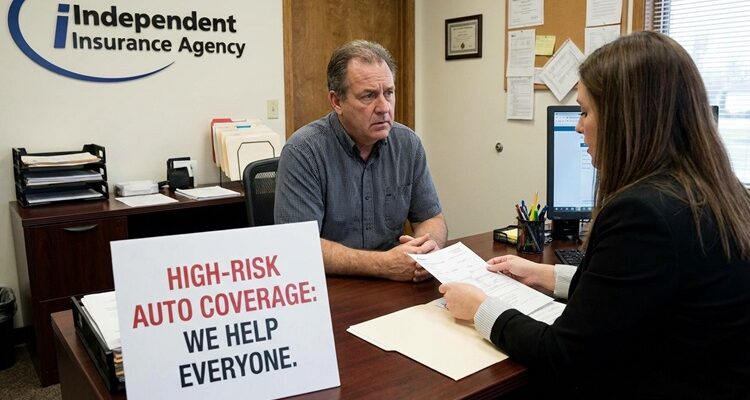
Your recent driving history has been less than perfect and now you’re stuck wondering how long it will be until you can get your old life back. Your auto insurance rates skyrocketed but you’re not sure if you have to pay these prices forever. The truth is that high-risk drivers aren’t high-risk forever, and the more you understand about the insurance industry’s rules and regulations, the easier and faster you can get your old rates back.
Table of Contents
SR-22 is a filing, not a policy
Many drivers mistakenly think that SR-22 is a type of insurance or that you need to specifically add it to your policy. The reality is it’s not insurance at all. SR-22 is simply a form that your insurer files with the state. It lets the state know that you have at least the minimum liability insurance required by law. If you’ve been convicted of a DUI, an at-fault accident caused your license to be suspended, or you lost it for any other reason, the state will require this form to be filed before you can drive again.
In California, that’s usually for three years. If you let the policy lapse for as much as a day during that time, the insurer will notify the DMV. That’s the part that’s kind of weird. The coverage isn’t special – just whatever your insurer normally sells that meets the state requirements and covers you according to your court agreement. It’s just the paperwork that is aimed at proving to the state you’re maintaining insurance that is out of the ordinary.
Your damaged record doesn’t lock you into one insurer
This is where many people miss out. They receive one quote from one company after an infraction, imagine that is the common price for a person in their circumstances, and repeat that process annually without seeking alternatives. High-risk rates can differ significantly from carrier to carrier, potentially by a few hundred dollars annually with the same coverage.
Just one DUI conviction alone can increase your rates by 80% or more (Insurance Information Institute). It’s a staggering statistic, but that’s an average of what the standard carriers who are not in the business to insure you will increase your rate by. Non-standard carriers rate risk differently and often come in well below what a standard market insurer would charge for an impaired rate. Shopping your insurance every 6-12 months, especially as the violation(s) start to fall off your record, will likely produce a cheaper rate than staying put.
Work with someone who knows the non-standard market
Conventional insurers frequently turn away high-risk candidates or provide rates so inflated that it’s easier for you to go elsewhere without even acknowledging your specific past. That’s just how they roll on underwriting. There’s a whole other slice of the market called non-standard insurance that needs your business, and if you’re filing in California, it helps to compare SR-22 insurance for high-risk drivers options directly rather than accepting whatever your current carrier offers after a violation shows up.
Your authorizing representative will still be entering everything you’d expect to see on a standard application form into a system shared by multiple companies, but these carriers have pre-decided they’re okay writing certain kinds of risk and will each generate a premium quote based on the information entered at the same time. Some of the larger non-standard carriers (The General, Dairyland, and Titan likely ring a bell in commercials if not your life) enable agents to provide a premium indication often in less than a minute, depending on how long your record is.
Ways to bring the cost down right now
You can’t erase the violation, but you can control a lot of the variables that go into your premium.
- Raise your deductible on collision and comprehensive if you’re carrying it. A higher deductible lowers your monthly premium noticeably
- Drive a lower-value vehicle if you have the option. They price collision and comp coverage partly based on repair and replacement costs
- Pay in full instead of monthly. Many carriers charge install fees that add up over a policy term
- Ask if they have telematics or usage-based. Several non-standard carriers now offer discounts at renewal for drivers that prove they’re driving safely after having a violation, even if the base rate started high.
- Complete a state approved defensive driving course. In some cases, it can remove points from your record and/or get you a discount depending on carrier
Don’t let coverage lapse while the SR-22 is active
The most costly mistake too many people make. California requires continuous proof of financial responsibility for the entire filing period. If your policy cancels for nonpayment, or you switch carriers without lining up the new SR-22 filing first, the DMV learns of the change automatically. That can mean a suspended license, a longer filing requirement or a rate increase on top of what you’re already paying. Set a calendar reminder for renewal dates and confirm with any new carrier, in writing, that they’ve filed before you cancel the old policy.
A short action plan
Retrieve your driving history and any DMV forms relating to the offense so you are fully aware of the situation. Ask for estimates from three or more non-standard carriers, or an independent agent representing that segment, and shop around for the best rate despite your previous fumble. Also, be sure to follow up to ensure the SR-22 filing actually reaches the DMV prior to terminating your old policy. Finally, mark your calendar to look for insurance quotes elsewhere in six to twelve months. Your rate will lessen in response to the age of the violation.
A rough patch on your driving record changes your options. It doesn’t have to define your budget for the next three years if you know which levers are actually yours to pull.








Comments